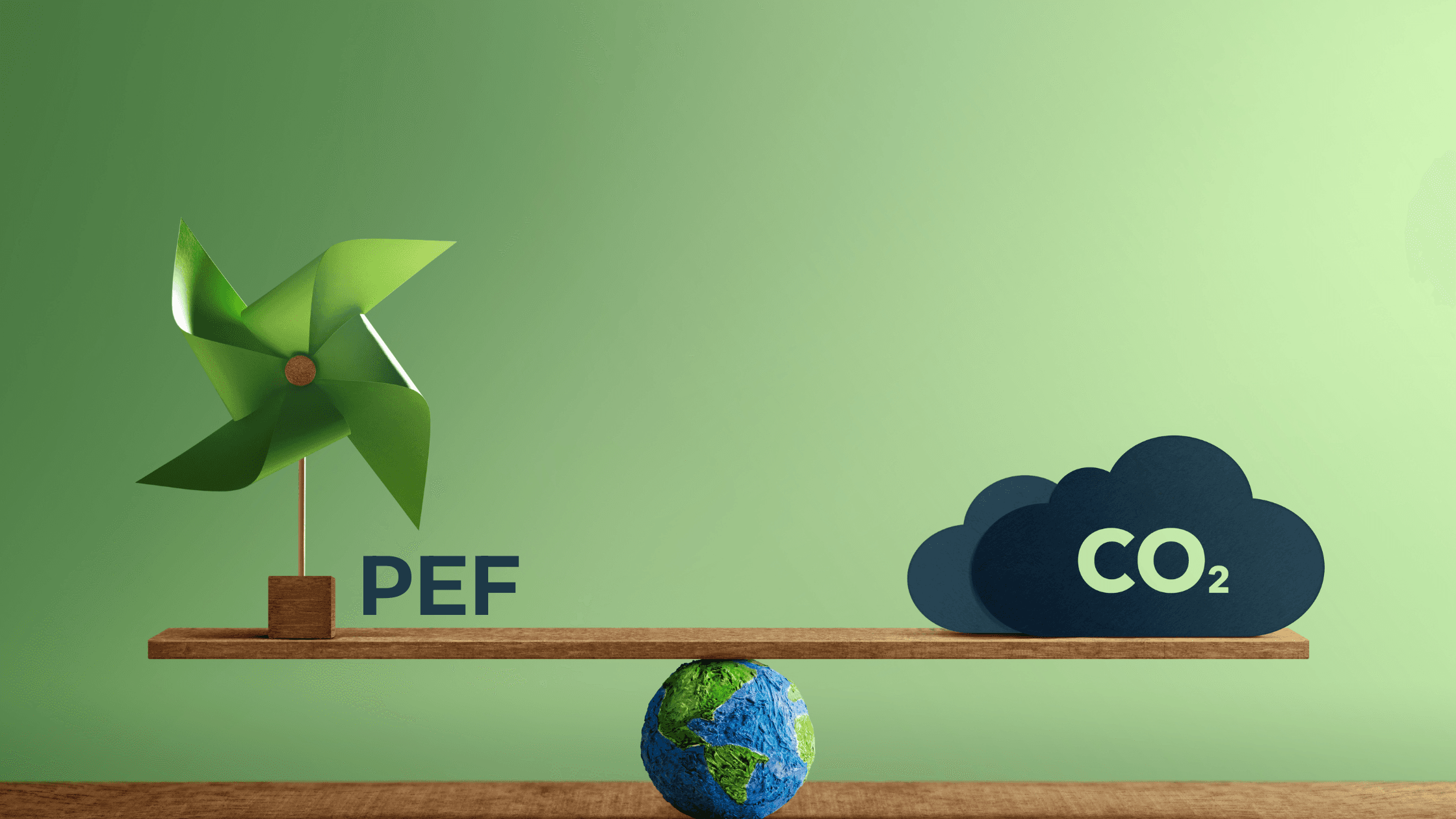
Carbon vs Product Environmental Footprint (PEF)
Introduction
In recent years, carbon footprint has become the primary reference point for measuring environmental impact.
Across agriculture and food systems, organizations are increasingly setting carbon reduction targets, tracking emissions, and reporting progress. This focus has helped bring structure and visibility to sustainability efforts.
However, as expectations evolve, an important question is emerging:
Is carbon alone enough to understand environmental impact in agriculture?
While carbon provides valuable insight into greenhouse gas emissions, it tells only part of the story. Agriculture interacts with complex natural systems affecting soil health, water use, biodiversity, and more.
To capture this broader picture, frameworks like Product Environmental Footprint (PEF) are gaining attention.
This article explores the key differences between carbon footprint and PEF and why a more comprehensive approach is essential for the future of sustainable agriculture.
Why Carbon Became the Standard
Carbon measurement has gained widespread adoption for good reason.
It provides:
A clear and quantifiable metric
A standardized way to track emissions
Alignment with global climate goals
In a complex system like agriculture, this simplicity has been essential. It allows organizations to establish baselines, set targets, and communicate progress in a consistent way.
As a result, carbon has become the foundation of many sustainability strategies.
What Carbon Does Well and Where It Falls Short
While carbon is a critical indicator, it represents only one dimension of environmental impact.
Agricultural systems are inherently multi-dimensional. In addition to greenhouse gas emissions, they influence:
Soil health
Water use
Biodiversity
Nutrient cycles
Focusing exclusively on carbon can therefore lead to an incomplete understanding of sustainability performance.
In some cases, it may even create trade-offs where improving one metric unintentionally affects others.
Introducing Product Environmental Footprint (PEF)
Product Environmental Footprint (PEF) offers a broader approach.
Instead of focusing on a single indicator, PEF evaluates environmental impact across multiple categories. These typically include:
Climate impact
Water use
Land use
Resource depletion
Ecosystem effects
By integrating these dimensions, PEF provides a more comprehensive view of how agricultural products affect the environment throughout their lifecycle.
Key Differences Between Carbon and PEF
The distinction between carbon footprint and PEF can be understood across three main aspects:
Scope
Carbon focuses on greenhouse gas emissions
PEF considers multiple environmental indicatorsDepth of Insight
Carbon provides clarity on climate impact
PEF highlights broader environmental trade-offs and interactionsApplication
Carbon is often used for high-level targets and reporting
PEF supports more detailed analysis and decision-making
Rather than replacing carbon, PEF builds on it offering additional layers of insight.
Why This Distinction Matters for Agriculture
Agriculture is deeply connected to natural systems. Decisions made at farm level influence not only emissions, but also soil quality, water systems, and biodiversity.
A narrow focus on carbon may overlook these interconnected effects.
By adopting a broader perspective:
Organizations can better understand real environmental impact
Strategies can be aligned with multiple sustainability goals
Trade-offs can be identified and managed more effectively
This is particularly relevant as supply chains become more complex and expectations around transparency continue to grow.
From Measurement to Better Decision-Making
The value of sustainability measurement lies in its ability to inform action.
Carbon metrics provide a strong starting point. They offer clarity and direction, especially in relation to climate goals. However, when combined with broader approaches such as PEF, they enable a more balanced understanding supporting decisions that reflect the full complexity of agricultural systems.
At Sproutfull, this broader perspective is key to helping organizations move beyond isolated indicators and towards a more connected view of environmental impact across their supply chains.
Beyond Carbon: The next phase of sustainability
As sustainability practices continue to evolve, the conversation is shifting from single metrics to more comprehensive approaches.
Carbon will remain an essential part of this landscape.
But it is increasingly complemented by frameworks that capture a wider range of environmental factors.
For organizations working in agriculture, this shift represents an opportunity:
To move from simplified measurement
To more informed and meaningful decision-making.
Conclusion
Carbon footprint has played a critical role in advancing sustainability efforts in agriculture. At the same time, it represents only part of a much broader picture. By integrating approaches such as Product Environmental Footprint, organizations can gain a more complete understanding of environmental impact one that reflects the complexity of real-world systems.
Ultimately, this more holistic perspective supports stronger strategies, better alignment across the supply chain, and more meaningful progress over time.
If you're looking to better understand your product’s environmental impact, get in touch with our team.